


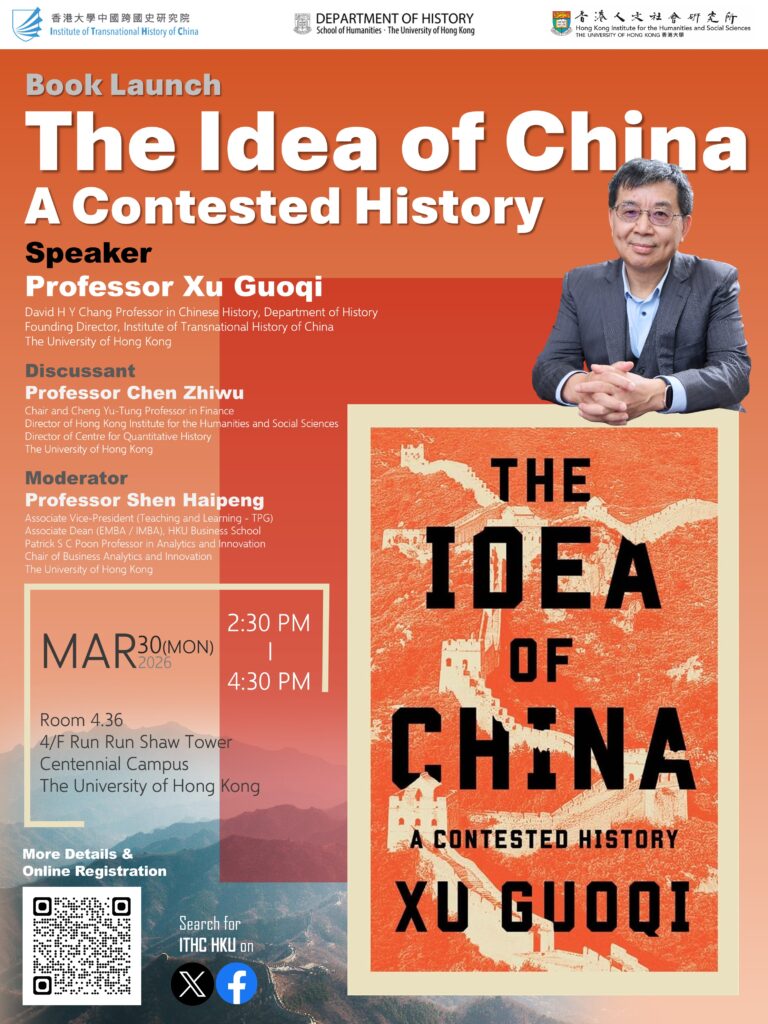
日期: 2026年3月30日
时间: 下午2:30 – 4:30
地点: 香港大学百周年校园逸夫教学楼4楼4.36室
主讲
徐国琦 教授
香港大学历史系张学义基金教授 (中国历史)
中国跨国史研究院创院院长
讨论嘉宾
陈志武教授
香港大学金融学讲座教授
郑裕彤基金教授(金融学)
量化历史研究中心主任
香港人文社会研究所所长
主持
沈海鹏教授
香港大学协理副校长(教学 – 教学型研究生课程)
港大经管学院副院长(EMBA & IMBA 课程)
潘燊昌基金数据科学与创新教授
商业分析与创新讲座教授
简介 (只提供英语版本)
An acclaimed historian’s bold response to two simple, yet vexed, questions: What counts as China, and who counts as Chinese?
China became a capitalist superpower by investing in globalization. Now that it has established its credentials—and emerged as a major US competitor—its leaders are looking within, focused on suppressing dissent and fostering cohesion. The result has been an increasingly nationalist cultural agenda, celebrating a Chinese identity steeped in the mystique of the Middle Kingdom and nostalgia for heroic twentieth-century resistance. Yet Chinese nationalism, like nationalism everywhere, is fraught. Few Westerners, and even fewer Chinese, recognize that the very idea of China is up for grabs.
In this sweeping history, Xu Guoqi explores the transnational construction of Chineseness. The Idea of China describes an identity constantly under renovation. Through dialogue and confrontation with neighbors, more distant outsiders, and Chinese speakers and writers within the state, Hong Kong, Taiwan, and the diaspora, the idea of China has been reshaped repeatedly across time. Even bedrock cultural formations like Confucianism have been reimported to China after their translation in Korea, Japan, Vietnam, and elsewhere. The idea of China has always been and remains a continuing process, invented, subverted, and reinvented to serve the shifting needs of kings and bureaucrats, industrialists and intellectuals, allies and adversaries.
Xu’s chronicle is as provocative as it is rigorous, and his conclusion could hardly be starker: China, fundamentally, is constituted by a shared history. To accept this is to begin moving past the heated great-power rivalries that threaten international peace and stability today.